Creating a comfortable and attractive home does not require expensive furniture, professional design services, or a complete renovation. Small improvements in color, lighting, furniture placement, storage, and decorative details can make a noticeable difference in how a room looks and feels. The key is to understand your needs, identify your preferred style, and make thoughtful decisions that balance appearance with everyday function.
People exploring latest decoratoradvice .com may be interested in practical ways to improve their homes, organize living spaces, and create interiors that reflect their personalities. Understanding the basics of home decorating can help homeowners and renters make better choices, avoid unnecessary spending, and develop rooms that remain comfortable and useful over time.
Understanding the Basics of Home Decorating
Home decorating involves selecting and arranging colors, furniture, fabrics, lighting, accessories, and other visual elements to create a balanced interior. Although decorating and interior design are closely related, decorating generally focuses more on the appearance and atmosphere of a space, while interior design may also involve layout planning, materials, and functional requirements.
A successful decorating plan begins with understanding how a room will be used.
For example, a family living room may need comfortable seating, durable fabrics, and enough open space for movement. A home office may require task lighting, an organized desk, and a quiet arrangement that supports concentration.
Before buying anything, consider the room’s purpose, the number of people who use it, the available space, and the amount of maintenance you can manage.
Identify Your Personal Decorating Style
Your decorating style influences the colors, furniture, materials, and accessories you choose. Some popular approaches include modern, traditional, minimalist, Scandinavian, industrial, and farmhouse-inspired interiors.
Modern interiors often feature clean lines, simple shapes, and carefully selected materials. Traditional rooms may include detailed furniture, classic patterns, and decorative accessories. Minimalist spaces emphasize simplicity and limit unnecessary objects, while Scandinavian-inspired rooms often combine light colors, natural materials, and practical furniture.
You do not have to follow one style strictly. Combining compatible elements can create a more personal result.
Collect a few images of rooms you like and identify their shared features. You may notice that you prefer warm wood, neutral walls, natural fabrics, or simple furniture. These observations can guide your decisions and help prevent inconsistent purchases.
Choosing Colors That Improve a Room
Color affects the visual character of an interior. It can make a space feel calm, energetic, warm, cool, or visually spacious. Choosing a suitable palette helps connect furniture, walls, flooring, and decorative accessories.
Start With a Simple Color Palette
A practical approach is to choose one dominant color, one supporting color, and one or two accent colors. The dominant color usually appears on larger surfaces, such as walls or major furniture pieces. Supporting colors create variety, while accents introduce smaller areas of contrast.
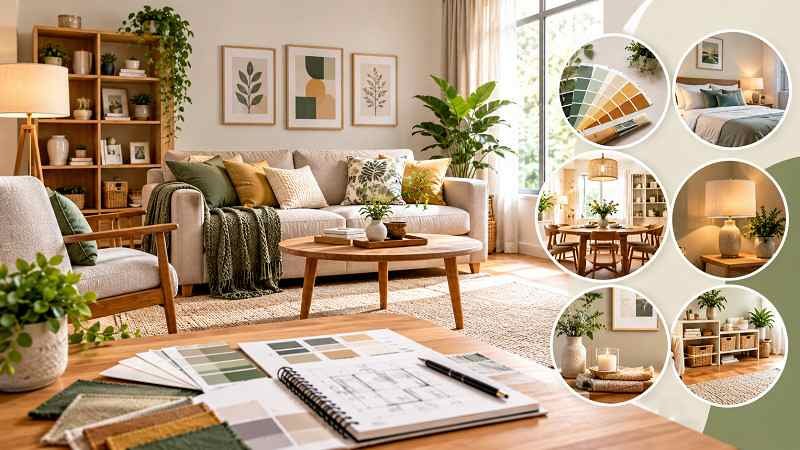
For example, a living room might combine warm white walls, natural wooden furniture, soft beige curtains, and muted green cushions. This arrangement creates visual interest without requiring many competing colors.
Neutral colors are useful because they can work with different decorating styles. However, neutral does not have to mean plain. Texture, natural materials, artwork, and carefully chosen accessories can make a neutral room feel inviting.
Test Paint Colors Before Committing
Paint can look different depending on natural light, artificial lighting, and nearby materials. A color that appears soft in a showroom may look much stronger on a large wall.
Test sample colors in different parts of the room and observe them at various times of day. Consider the existing flooring, curtains, furniture, and fixed finishes before making a final decision.
This simple step can help avoid repainting and unnecessary expense.
Arranging Furniture for Comfort and Function
Furniture placement influences how easily people move through a room and how comfortable the space feels. Even attractive furniture can make a room difficult to use when it blocks pathways or overwhelms the available area.
Measure Before Buying Furniture
Measure the room’s length and width, along with doorways, windows, and other important features. Record the dimensions of furniture you already own and compare them with potential replacements.
Think about more than whether a piece fits against a wall. It should also allow people to walk comfortably, open doors, reach storage, and use the room without obstruction.
For a living room, arrange seating around a natural focal point, such as a window, fireplace, or television. Keep conversations comfortable by placing chairs and sofas at practical distances from one another.
Create Balance Without Matching Everything
Furniture does not need to come from one collection to look coordinated. Different shapes, materials, and finishes can work together when they share a consistent feature.
For instance, a wooden coffee table may complement upholstered seating when the colors and proportions feel balanced. Matching cushions, a coordinated rug, or repeated wood tones can connect different pieces.
Avoid filling every empty corner. Leaving some open space makes movement easier and allows the most important furniture and decorative features to stand out.
Using Lighting to Create the Right Atmosphere
Lighting affects both the appearance and usefulness of a room. A well-lit space supports daily activities while creating a comfortable atmosphere in the evening.
Combine Different Types of Lighting
Most rooms benefit from a combination of three lighting types.
- Ambient lighting: Provides general illumination throughout the room.
- Task lighting: Supports specific activities, such as reading, cooking, or working.
- Accent lighting: Highlights artwork, shelves, architectural details, or decorative objects.
A bedroom, for example, may use a ceiling light for general visibility, bedside lamps for reading, and subtle accent lighting to create a relaxing atmosphere.
Natural light also deserves attention. Sheer curtains can soften incoming sunlight while maintaining privacy, depending on the room’s position and window design. Mirrors can help distribute light visually, although their effect depends on their placement and the available light source.
Choose light fixtures that suit the room’s size and purpose. Consider bulb brightness, color temperature, energy use, and whether the fixture provides enough light for its intended task.
Selecting Furniture, Fabrics, and Decorative Accessories
Decorative items help establish character, but too many accessories can make a room feel crowded. The goal is to choose pieces that contribute to the room. See more