
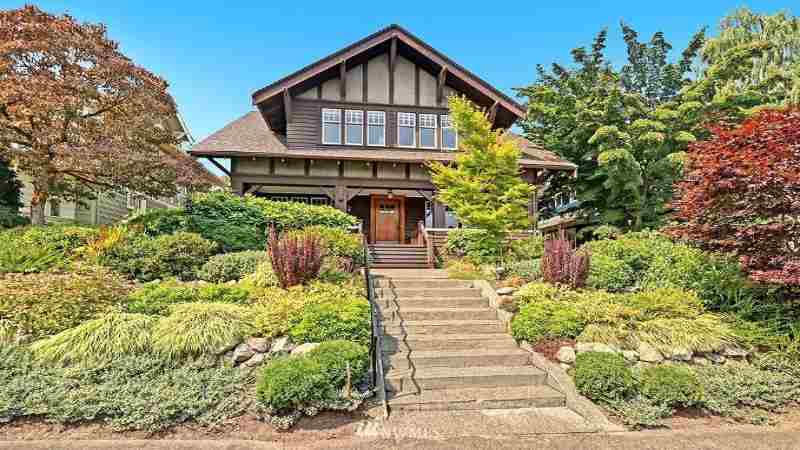
There is a distinct romance to the idea of owning a 1910s Craftsman in Seattle. You picture yourself sitting on a wide, covered porch on a rainy Pacific Northwest morning, surrounded by mature trees and rich, original woodwork. This classic aesthetic is a massive draw for homebuyers looking to put down roots in the city.
However, buying a century-old property requires more than just an appreciation for historic charm. Pragmatic buyers need hard data before making a million-dollar commitment. You need to understand the true financial realities, the hidden maintenance costs, and how the specific block you choose will dictate your daily life.
The Character and Architectural Heritage of Wallingford
Defining Features of the Seattle Craftsman and Foursquare
Wallingford’s streets are lined with homes built primarily between the late 19th century and the 1930s. The dominant architectural styles are the Seattle Craftsman and the classic American Foursquare. These homes were built with incredible attention to detail, utilizing old-growth timber that is nearly impossible to source today.
The defining visual elements of these properties are immediately recognizable. You will find wide eaves, low-pitched rooflines, exposed rafter tails, and thick, chunky porch columns. Because of this enduring architectural quality, these properties are widely considered the “quintessential single-family Seattle dream home” for local buyers.
Despite waves of modern redevelopment across the city, Wallingford has managed to preserve much of its original identity. The neighborhood maintains a community scale, framed by massive, mature tree canopies and streets that feel remarkably historic. The deep, rich woodwork inside these homes—often featuring built-in dining room buffets and original box-beam ceilings—remains a major selling point.
For buyers exploring Wallingford real estate, that architectural character is only part of the picture. Knowing which streets, home styles, and pockets of the neighborhood best fit what you are looking for can make the search much more focused, especially when older homes have such distinct features and histories.
Will a 100-Year-Old Floor Plan Work for You?
While the exterior charm is undeniable, the interior layout of a 1910s home can present challenges for a modern, dual-income family. Homes from this era were designed for a very different way of life. Rooms were heavily segmented to contain heat in the winter, and kitchens were built as purely utilitarian, closed-off workspaces.
You can also expect significantly smaller bedroom closets and fewer bathrooms than a comparable modern build. Today’s buyers usually expect open-concept living, where the kitchen flows seamlessly into the dining and living areas. Walking into a historic Foursquare and finding a maze of small, separated rooms can be a jarring experience.
The good news is that these floor plans are rarely a dealbreaker if you plan. With the right architectural knowledge and renovation feasibility planning, you can make strategic adjustments. Removing non-load-bearing walls or expanding a galley kitchen can modernize the flow of the house without erasing its core historic identity.
Navigating Wallingford’s Neighborhood Layout and Zoning
Per-Block Lifestyle Realities (North vs. South of 45th St)
Wallingford is highly walkable, but your daily experience changes dramatically depending on where you land on the neighborhood grid. The area is anchored by N 45th Street, a bustling commercial spine filled with restaurants, grocery stores, and local shops. This street essentially cuts the neighborhood into two distinct lifestyle zones.
Homes situated north of 45th Street offer a quieter, more traditional residential feel. The streets are quieter, making this section popular for buyers prioritizing a peaceful environment. The trade-off is a longer walk or a short drive to reach the neighborhood’s famous waterfront parks.
Conversely, the southern border of Wallingford offers a much more active, urban energy. Living south of 45th Street provides immediate access to Gas Works Park and Lake Union water recreation. This area is also ideal for commuters who want quick access to the Burke-Gilman Trail for a dedicated, scenic bike route into downtown or the University District.
How Middle Housing Ordinances Impact the Area
Seattle’s zoning landscape is changing, and Wallingford is directly in the path of these shifts. The city recently implemented Middle Housing ordinances designed to increase housing density across all neighborhoods. This means that areas traditionally reserved strictly for single-family homes now allow for 4 to 6 units per lot.
For pragmatic buyers, this translates to an influx of modern townhome infill across the Wallingford grid. You will increasingly see sleek, multi-story developments sitting directly next door to century-old Craftsman homes. It is a visual shift that reflects the city’s need for more accessible housing inventory.
However, buyers should not panic about losing the neighborhood’s identity. While these zoning shifts certainly increase local density, Wallingford’s core architectural charm remains heavily intact. The robust preservation of the existing housing stock ensures that the historic, tree-lined residential feel will persist even as the neighborhood evolves.
Conclusion
Buying behind the beautiful Craftsman façade in Wallingford is a deeply rewarding experience, but it is not a decision to make lightly. It requires a highly pragmatic understanding of current market prices, the realities of the neighborhood layout, and the financial demands of historic upkeep. You need to know that your romantic vision aligns with your actual daily lifestyle.
Navigating this process successfully requires more than just a standard real estate transaction. It requires a collaborative team that combines deep architectural knowledge, hyper-local market data, and dedicated contractor support. Having professionals who can tell you exactly what a wall removal will cost before you buy the house gives you a massive advantage. See more