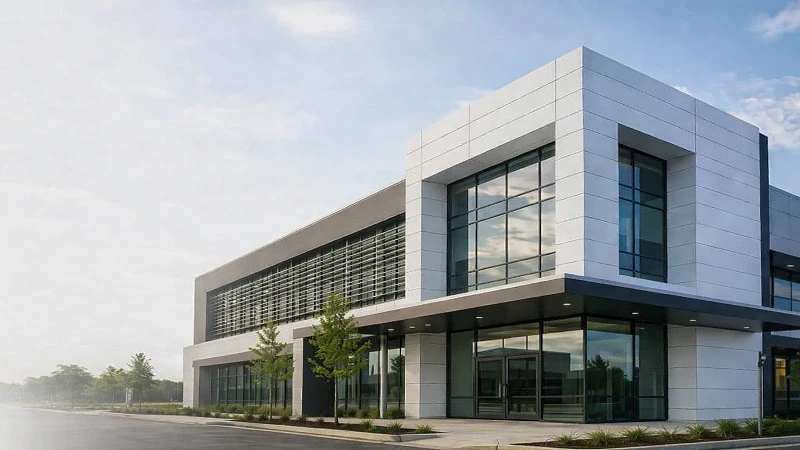
Non-combustible aluminium composite panels or ACPs continue to grow in popularity in Australia and overseas for exterior facades, especially commercial, industrial, and high-rise residential apartment building cladding systems. Choosing the right product is imperative, and this means selecting a Deemed-to-Satisfy (DtS) non-combustible aluminium cladding material.
Key Insights
- In Australia, aluminium is a popular modern cladding material, with solid aluminium and non-combustible aluminium composite panels both providing a sleek, visually appealing aesthetic.
- The gold-standard aluminium cladding option in Australia today is Deemed-to-Satisfy (DtS) non-combustible aluminium cladding, which comprises thin sheets of aluminium covering a mineral fibre core. It is a lightweight, cost-effective, versatile, durable, sustainable, and fire-safe option for designers and building owners.
- For commercial and industrial applications (including high-rise residential buildings), ALPOLIC™ NC/A1 is a world-class DtS aluminium cladding product and is the gold standard in terms of fire safety.
Lightweight and durable, aluminium cladding is a highly esteemed, visually versatile building façade option that protects buildings from weather, fire, and UV damage. It also improves the properties of thermal and acoustic insulation, energy efficiency, and eco-friendliness. There are various product options from which to choose, and ALPOLIC™ non-combustible aluminium composite panels stand out for all the right reasons. These become self-evident when you take a look at the main factors to consider when selecting your cladding material.
Top Things to Consider When Choosing Exterior Cladding
Design Versatility
Aluminium cladding is extremely versatile in terms of design, and ALPOLIC™ comes in an impressive range of finishes, patterns, and colours. It’s easy to create an eye-catching, distinctive, and on-brand aesthetic for any building – from a sleek and modern hospital to a sophisticated retail space, rugged industrial premises, or a fun and vibrant childcare or primary school.
Fire Safety
Compliance with Australia’s building codes requires that cladding systems be fire-safe. Using combustible cladding (including aluminium composite panels with combustible core materials) on new buildings and renovations has been outlawed, and many owners of older buildings with existing combustible cladding are electing to remediate these properties with a recladding project using non-combustible cladding.
DtS non-combustible aluminium cladding is made with a mineral core; this complies with fire safety standards, and it will neither ignite nor contribute to the spread of flames. The premium material option is ALPOLIC™ NC/A1, which is a DtS non-combustible aluminium composite cladding product. It meets Europe’s highest fire safety classification, EN 13501-1 Class A1 rating and Australian standards, and has been designed and engineered for the Australian market for any building that must meet strict fire safety standards. This includes high-rise towers, commercial and industrial buildings, schools, hospitals, and aged care facilities.
Durability and Weather Resistance
Cladding plays an important role in protecting a building from Australia’s harsh climate and weather conditions, including rain, wind, temperature extremes, hail, snow, pollution, coastal conditions, and UV exposure. You must consider your chosen cladding product in terms of panel construction, coating system, cleaning, and maintenance needs.
ALPOLIC™ panels are durable and FEVE-coated for utmost longevity in all conditions. They are corrosion-resistant and ideal in urban, coastal, and rural environments.
Ease of Installation
You need a cladding system that is light and easy (and therefore more affordable) to install, and it must also be compatible with your building’s underlying structure: substrate material, supporting framework, and insulation system. You need to choose your supplier carefully and consult with them closely for professional guidance on your cladding product. You must also choose a qualified installer.
Environmental Considerations
Sustainability is a major consideration for most people today, and choosing a cladding system made with aluminium is a savvy choice. Aluminium is recyclable, and using recycled aluminium further (and dramatically) reduces the carbon footprint of a product.
ALPOLIC™ panels are 100% recyclable at the end of their life cycle (both the aluminium itself, as well as the mineral core materials), and ALPOLIC™ NC/A1 has an Environmental Product Declaration (EPD) certification.
Furthermore, ALPOLIC™ uses low-VOC coating systems, which help to promote healthier air quality both indoors and outdoors.
Final Thoughts
Choosing the right aluminium cladding system requires consideration of durability, performance, fire safety, aesthetics, compliance, and sustainability. Premium options such as ALPOLIC® NC/A1 deliver across all metrics to ensure your building is durable, structurally sound, energy-efficient, fire-safe, and compliant in the long-term.
See more.