
Most people who buy a laser marking machine for their shop aren’t thinking about research labs. Fair enough. Those feel like different worlds.
But there’s a real connection between what gets developed in materials science labs and what ends up available to small metal shops two or three years later. The fiber laser marking machines sitting on workbenches in fabrication shops today exist because of research that happened ten or fifteen years ago.
That pipeline is still running. Faster, actually.
What Laser Systems Research Actually Covers
When physicists and materials engineers talk about laser systems for materials research, they’re working on questions like: how does a focused laser pulse interact with a specific alloy at a specific energy level? What happens to the surface microstructure? Can we control the heat-affected zone precisely enough to change material properties without damaging the substrate?
These aren’t industrial production questions. They’re science questions.
But the answers feed directly into industrial tool design. Better pulse control in a research laser shows up, eventually, in the pulse width adjustability you see in MOPA fiber laser marking machines. Better understanding of how metals respond to different laser wavelengths shows up in the clean stainless steel marks that commercial fiber systems produce reliably today.
The lab and the shop floor are more connected than they look.
Laser Ablation Research: The Application That Gets Less Attention
Laser ablation is one of the most active areas of laser systems laboratory research right now.
Ablation means using a laser to remove material precisely. Very small amounts. Very controlled. This gets used in biomedical applications for tissue removal during surgery. In electronics for removing material from semiconductors at a microscopic scale. In conservation work for cleaning historical artifacts without damaging the underlying surface.
What makes fiber laser systems attractive for ablation research is the same thing that makes them useful in manufacturing: tight beam focus and controllable pulse parameters. A very short, very high-energy pulse can remove a tiny amount of material without heating the surrounding area significantly. That’s called “cold ablation” loosely, though the physics are more nuanced.
From a research standpoint, the ability to control exactly how much energy hits exactly how large a spot, with precise timing, is valuable in ways that go well beyond surface marking. Fiber laser research applications now include thin film removal, micro-machining, and surface treatment for biocompatible implants.
Not typical shop work. But the technology base is shared.
Precision Laser Systems Research: Why Repeatability Matters So Much
In any serious laser systems laboratory, repeatability is as important as raw power. A system that ablates one sample perfectly but varies on the next sample isn’t useful for research. You need the same result every time to draw valid conclusions from an experiment.
This obsession with repeatability in precision laser systems research drove improvements in beam quality, pulse stability, and power consistency that benefited industrial machines directly.
When a small shop says their fiber laser marking machine produces consistent marks on every part in a batch, they’re benefiting from the same engineering that makes research-grade laser systems repeatable at the lab level. The tolerances are different. The physics is the same.
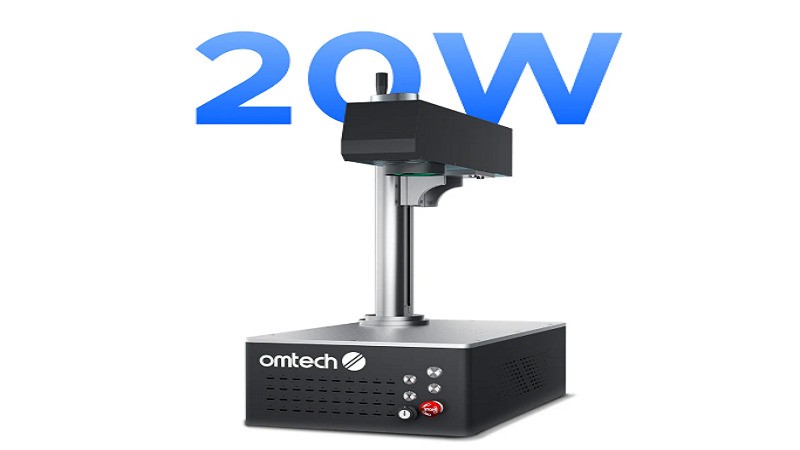
The Galvo Fiber 20/30/50W Autofocus Laser Marking Machine is a practical example. Autofocus means consistent focus distance across parts with varying heights. Consistent focus means consistent marks. That predictability is exactly what machining shops and custom engravers need, and it’s the same property that makes a laser system usable in a research context.
How Research Advances Filter Into Commercial Machines
The path from research to product isn’t instant. Usually it goes something like this.
A fundamental advance happens in a university or government lab. Faster pulse modulation, better beam shaping, improved fiber materials. This gets published, patents get filed, component manufacturers start incorporating the improvements. Laser system manufacturers adopt those better components. Commercial machines get updated.
Five to ten years from breakthrough to widespread commercial availability is a rough average, though it’s compressing.
MOPA fiber laser technology is a good example. Pulse width control for color marking on stainless steel was a research curiosity before it was a commercial product. Now OMTech sells MOPA fiber laser marking machines that small shops use for tumbler color engraving and custom gift work. The research commercialized into a practical tool.
That path is running continuously. What’s in advanced research labs today may be in commercial shop equipment by 2030.
The Fiber Laser vs CO2 Split in Research Contexts
Worth addressing because this comes up.
Particularly for non-metal materials: polymers, biological tissue, optical components made from glass and similar materials. The CO2 wavelength interacts with these materials in ways fiber doesn’t.
Fiber laser systems dominate in metal materials research because of metal wavelength absorption, energy efficiency, and the tighter beam focus achievable through fiber delivery. For work on alloy surfaces, thin metal films, and metallic biomaterials, fiber is typically the system of choice in modern labs.
This mirrors the industrial split. CO2 handles organic and soft materials. Fiber handles metal. That division exists at every scale, from university research apparatus to shop floor marking stations.
According to Wikipedia’s overview of fiber lasers, fiber laser systems offer advantages in beam quality and efficiency that make them particularly suitable for precision applications requiring stable, diffraction-limited output. That beam quality is why both research labs and manufacturers favor fiber for work where precision is non-negotiable.
What This Means for Small Shops Today
The research investment going into fiber laser systems right now is pushing the technology forward in ways that will matter commercially.
Shorter pulse durations. Better control over heat delivery. New wavelengths that expand what materials fiber lasers can process. Improved beam shaping that allows more complex surface treatment in a single pass.
These aren’t abstract benefits. When they make it into commercial machines, shops will be able to mark new materials, achieve finer detail, and process faster with the same energy input.
The connection runs both ways too. Industrial demand drives where research money goes. As more manufacturers adopt fiber laser systems and push the limits of what current commercial machines can do, that demand feeds back into what researchers prioritize.
Browse OMTech’s current fiber laser machines collection to see where commercial fiber laser capability stands today. The machines available now reflect decades of accumulated research that finally reached practical production cost.
FAQs
What is laser systems research used for?
Materials characterization, surface treatment, ablation for medical and electronic applications, thin film processing, precision micro-machining, and fundamental physics experiments involving light-matter interaction.
What is laser ablation research?
Research into using precise laser pulses to remove controlled amounts of material without significant heat spread. Used in biomedical devices, semiconductor fabrication, and conservation of cultural artifacts.
Why do research labs prefer fiber laser systems?
Fiber lasers offer excellent beam quality, stable pulse parameters, high energy efficiency, and tight beam focus. For precision experiments on metal surfaces and thin films, these properties are critical for reproducible results.
How does research connect to commercial fiber laser machines?
Research advances in pulse control, beam quality, and fiber materials move through component manufacturers into commercial machine designs over time. Most features in current commercial fiber marking machines trace to research that happened years earlier.
What is the difference between fiber laser marking and fiber laser ablation?
Marking changes the surface color or texture. Ablation removes material. Both use fiber laser energy, but ablation uses shorter, more intense pulses to vaporize material rather than just heat the surface. Industrial marking machines can do light ablation with appropriate settings. See more.