Trees can be valuable features of a residential property, providing shade, privacy, and an established landscape. Like other living elements of a garden, trees can develop diseases, suffer structural damage, and undergo changes that may affect their health over time. Consulting a Northern Beaches Arborist when unusual or potentially hazardous changes appear can help homeowners understand whether a tree requires pruning, further assessment or another form of professional management.
Not every unusual-looking branch or seasonal change indicates a serious problem. The important thing is recognising signs that deserve closer attention, particularly when a large tree is located near a home, driveway, footpath or other frequently used area.
Dead or Damaged Branches Become More Noticeable
Dead branches are a clear sign that a tree may need professional assessment. A branch without healthy foliage during the normal growing season may be dead or declining, although seasonal characteristics vary between tree species. Other warning signs may include damaged bark, broken areas, or branches weakened by severe weather. Large dead branches can become a safety concern if they fall unexpectedly, and their position can be just as important as their size. A branch positioned above a driveway, building, or regularly used outdoor area may require greater attention than one located away from people and structures.
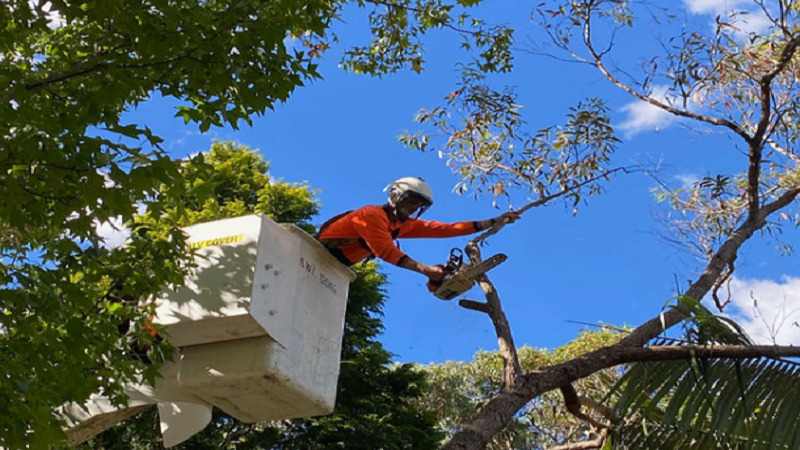
Homeowners should avoid climbing mature trees or attempting to remove large branches themselves. Tree work at height involves significant risks and may require specialised equipment. An arborist can evaluate the branch alongside the overall condition of the tree and decide whether pruning is necessary.
Changes in Leaves Can Provide Useful Clues
Leaves often provide visible clues about how a tree is responding to its environment. Unexpected thinning of the canopy, unusual discolouration, or leaves dropping at an unusual time can sometimes indicate that a tree is experiencing stress. However, these symptoms may result from a variety of different causes. Water availability, weather conditions, pests, disease, root disturbance, and seasonal changes can all influence foliage.
The pattern of the change can be useful. If only one section of the canopy is declining while the rest appears healthy, the cause may differ from a tree experiencing widespread changes. Homeowners can also compare the tree with previous seasons. A gradual reduction in canopy density over several years may be easier to recognise when photographs of the property are available. Foliage changes alone are rarely enough to determine exactly what is happening. When symptoms are significant or persistent, professional assessment can provide more context.
Cracks, Cavities and Decay Deserve Attention
The trunk and major branches form the structural framework of a tree, so visible changes in these areas should not be ignored. Large cracks, cavities, damaged bark, or areas of decay may justify closer assessment, particularly when they occur near major branch unions or the base of the tree. Fungal growth around a tree can also be worth investigating. Some fungi grow on dead or decaying organic material, although their significance varies depending on the species and location.
The presence of a cavity does not necessarily mean that the tree needs to be removed. Trees can sometimes continue growing with significant defects, and the importance of a particular feature depends on the tree’s overall structure and surrounding environment. This is where visual assumptions can be misleading. A hollow-looking tree may remain relatively stable in some circumstances, while another tree with fewer obvious external signs may have structural concerns that are harder to recognise. Professional assessment considers individual defects as part of the entire tree rather than judging its condition from one feature alone.
Leaning Trees Need Context, Not Assumptions
Many healthy trees naturally grow at an angle, so a leaning trunk does not necessarily mean the tree is unstable. What matters is whether the lean is longstanding or appears to have developed recently. A sudden change in position, particularly after heavy rain, strong winds, or ground disturbance, can warrant prompt professional attention. Changes around the root zone, lifting soil, or newly exposed roots may provide additional reasons for concern.
The surrounding site also matters. Construction, excavation, and landscaping can alter conditions around a tree’s roots. Soil levels may change, roots can be damaged, and drainage patterns can be affected. Homeowners planning major work near established trees should therefore consider tree protection before construction begins rather than waiting until visible decline appears afterwards. When a tree’s position has noticeably changed, avoid standing or parking beneath potentially affected areas until appropriate advice has been obtained.
Storms Can Reveal Existing Weaknesses
Strong winds and heavy rain can damage trees directly, but storms can also reveal weaknesses that were already present. After significant weather, homeowners can visually check trees from a safe position on the ground. Look for broken or hanging branches, newly exposed damage, or noticeable changes in the canopy. Avoid approaching branches caught in the tree or attempting to pull them down. Particular caution is necessary around power lines. Trees or branches contacting electrical infrastructure can be extremely dangerous and should be handled through the appropriate utility or emergency channels.
Even when a tree appears to have survived a storm, damage may not always be immediately obvious. Splits or partially broken branches can remain within the canopy. Large mature trees close to buildings or frequently occupied areas may therefore benefit from assessment when there are signs of significant storm damage. Photographs taken safely from the ground can also help document changes and provide useful information when seeking professional advice.
Recurring Problems May Need a Broader Assessment
Repeatedly addressing individual branches may not resolve a problem if the underlying cause involves the overall condition of the tree. For example, frequent branch dieback could potentially relate to environmental stress, root conditions, or another issue affecting the tree more broadly. Similarly, repeated interference with buildings may indicate that the tree’s size and location need to be considered as part of a longer-term management plan. Professional tree management does not always mean removal. Depending on the circumstances, recommendations may involve selective pruning, monitoring or other appropriate measures.
Local requirements should also be considered before significant pruning or tree removal. Rules can vary according to the property, tree, and local council requirements, and approval may be necessary for certain work. Homeowners should check applicable requirements rather than assuming that a tree on private property can automatically be removed or extensively pruned. Taking a broader approach can help balance the health and value of established trees with practical considerations around buildings, outdoor areas and property safety.
Conclusion
Trees naturally change with seasons and age, so not every unusual feature is a reason for concern. However, dead branches, significant foliage changes, cracks, decay, sudden leaning and storm damage can all justify closer attention. The importance of these signs depends on the individual tree and its surroundings. Large trees near homes, vehicles, pathways, and other frequently used areas may require particular consideration when structural changes appear.
Rather than attempting hazardous pruning or making assumptions about whether a tree needs removal, homeowners can seek professional assessment when significant or persistent changes occur. Early attention can provide a clearer understanding of the tree’s condition and the options available for managing it appropriately. See more