
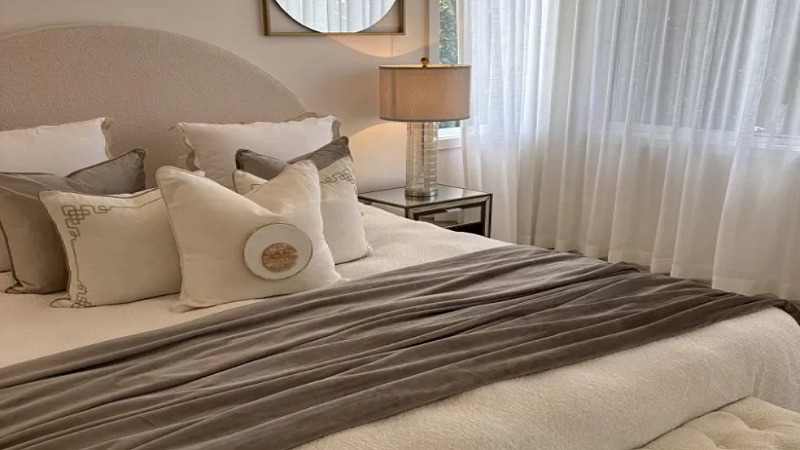
A small bedroom can still make a strong impression on potential buyers when it is presented thoughtfully. The goal isn’t to disguise the room’s actual dimensions, but to help buyers understand how comfortably they can use the available space. Furniture placement, colour choices, lighting, and visible floor space can all influence whether a compact bedroom feels open and inviting or crowded and hard to use.
Preparing the room for sale is also different from decorating it purely for personal taste. Sellers need to consider how the bedroom will look during inspections and in listing photos, where clutter and oversized furniture can make limited space feel even more cramped. Looking at practical bedroom staging ideas from The Styling Project can help homeowners identify simple changes that improve presentation without requiring a complete bedroom renovation.
Remove Furniture That Makes the Bedroom Feel More Cramped
Small bedrooms can quickly become overwhelmed when they contain too many pieces of furniture. A bed, two large bedside tables, tall drawers, an armchair, and additional storage may all be useful in everyday life, but together they can reduce visible floor space and make movement around the room difficult. Before listing the property, consider whether every piece needs to remain in the bedroom during the sales campaign.
Removing unnecessary furniture can create clearer pathways and allow buyers to understand the room’s proportions more easily. This does not mean leaving the bedroom almost empty, as buyers still benefit from seeing how essential furniture fits within the space. The aim is to retain enough pieces to demonstrate the room’s function while removing items that compete for attention or make the layout appear tighter than it actually is.
Choose Furniture That Suits the Scale of the Bedroom
Furniture scale can have a major influence on how spacious a bedroom appears. An oversized bed frame or deep bedside tables can dominate a compact room, leaving little space between furniture and walls. Where practical, using appropriately proportioned furniture can create better balance and make it easier to maintain comfortable pathways around the bed.
The bed should remain the main visual feature without occupying every available centimetre of floor space. Slim bedside tables, simple lamps and furniture with less visual bulk can help maintain functionality while keeping the room feeling lighter. Buyers should be able to see where furniture belongs while also recognising that there is enough space to move comfortably and use the bedroom as intended.
Keep Colours and Bedding Visually Simple
Colour can influence the overall impression of a small bedroom, particularly when walls, bedding, curtains and accessories are competing for attention. A restrained colour palette can create a more cohesive appearance and reduce visual clutter. Neutral or softer tones are commonly used in property styling because they can provide a calm background while allowing the room’s proportions and natural features to remain noticeable.
Bedding is especially important because the bed usually occupies a large percentage of the visible room. Layers can add comfort and texture, but too many cushions, heavy patterns, or bulky blankets may overwhelm a smaller space. Simple bedding with carefully selected textures and a limited number of decorative elements can make the bedroom feel finished without making the styling itself the dominant feature.
Maximise Natural and Artificial Lighting
A well-lit bedroom can feel more open and welcoming than the same space with dark corners and blocked windows. Before inspections or photography, open curtains and blinds where appropriate and avoid placing bulky furniture where it unnecessarily reduces natural light. Cleaning windows and keeping the area around them visually uncluttered can also help the available daylight become a stronger part of the room.
Artificial lighting matters as well, particularly in bedrooms that receive limited natural light or are photographed on an overcast day. Bedside lamps and suitable ceiling lighting can provide additional illumination while contributing to the overall presentation. Rather than relying on one harsh source of light, consider how the existing lighting works across the room and whether darker areas can be improved without adding unnecessary fixtures or clutter.
Keep Surfaces and Storage Areas Uncluttered
Everyday items can make a small room appear even smaller because they introduce additional shapes, colours and objects into an already limited space. Bedside tables covered with chargers, bottles, books and personal belongings can distract from the room itself. Dressers, desks and open shelving can have a similar effect when every available surface is filled with possessions.
Before photography and inspections, reduce visible belongings and keep styling intentional. A lamp, a small decorative item or another carefully chosen accessory may be enough for a bedside table without leaving it completely bare. Built-in wardrobes and storage should also be organised where buyers are likely to inspect them, as overcrowded storage can create the impression that the property does not provide enough room for everyday belongings.
Use Layout to Show That the Bedroom Is Functional
The best bedroom layout is not always the arrangement that allows the most furniture to fit. When preparing a home for sale, arrange the room to clearly show how comfortably the space can be used. Buyers should be able to enter without navigating around obstacles, move around the bed where space allows, and easily understand the location of wardrobes, windows, and other important features.
This becomes particularly important when staging a small spare bedroom. Trying to make a compact room function simultaneously as a bedroom, office, storage space, and exercise area can make its purpose unclear. Giving the room one primary function often creates a stronger impression, whether it is presented as a guest bedroom, child’s room, or another suitable use that makes sense for the property and available space.
Conclusion
Making a small bedroom look bigger is less about creating an illusion and more about presenting the available space clearly. Removing excess furniture, choosing appropriately scaled pieces, simplifying bedding, improving lighting, and reducing visible clutter can all help buyers see the room’s proportions and understand how it can function in everyday life.
The most effective staging decisions usually work together rather than relying on one decorating trick. A carefully positioned bed will have less impact if the room remains cluttered, while a light colour palette cannot compensate for oversized furniture that blocks movement. By considering the bedroom as a complete space, sellers can create a cleaner, more balanced presentation that allows a compact room to show its potential. See more