
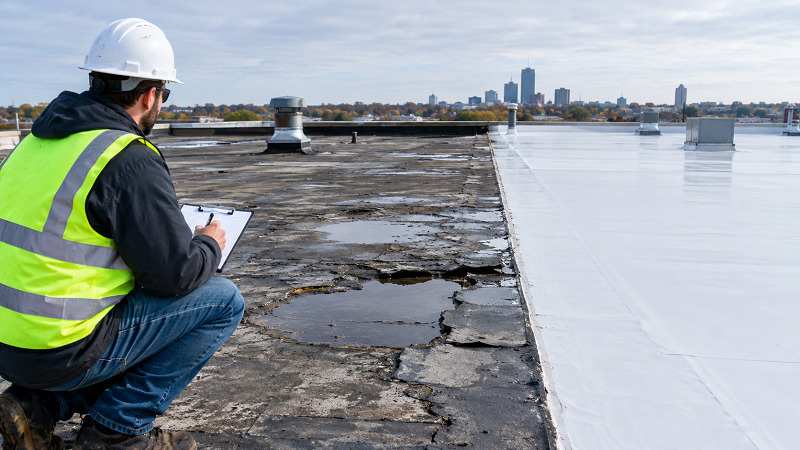
A commercial roof protects your building, workers, equipment, and daily business operations. However, there comes a time when repeated repairs may no longer be the right answer. Knowing when Commercial Roof Replacement makes more sense can help property owners avoid bigger problems later. Before making that decision, getting a full assessment before choosing replacement is an important step. A professional Commercial Roof Replacement can be a practical choice when the roof has reached the end of its useful life, suffers from serious damage, or needs repairs again and again. In Northeast Ohio, snow, ice, strong winds, rain, and freeze-thaw cycles can put extra stress on commercial roofing systems. Therefore, understanding the condition of your roof can help you choose between another repair and a full replacement.
Repair or Replace a Commercial Roof?
The choice between repair and replacement depends on the roof’s actual condition. A small leak does not always mean that the entire roof needs to come off. In many cases, a roofing contractor can fix a damaged area and extend the roof’s service life.
However, some roofs have problems that go far beyond one small leak. If several areas need attention, the repair work may become more frequent and costly. At that point, replacing the roof may make more sense.
Think of it this way: if your roof needs one small repair, fixing it can be simple. If the same roof needs repairs every few months, you may be spending money without solving the main problem.
Signs Your Commercial Roof May Be Near the End of Its Life
Every roofing system has a limited roof lifespan. The exact life depends on the material, installation quality, maintenance, weather exposure, and building conditions.
Here are some common roof end-of-life signs to watch for:
1. Frequent Leaks
One leak can often be repaired. But when leaks keep appearing in different areas, they may point to a wider roofing problem.
Water can travel beneath membrane roofing before it becomes visible inside the building. Therefore, the location of an indoor leak does not always show where the roof damage started.
2. Widespread Membrane Damage
Many commercial buildings use membrane roofing systems. These include materials designed for low-slope and flat roofs.
Over time, membranes can develop cracks, splits, loose seams, or other signs of aging. When damage covers large sections of the roof, patching each area may not provide a lasting solution.
In that situation, a Commercial Roof Replacement may offer a more complete way to address the aging system.
3. Ponding Water
Flat roofs need proper drainage. When water stays on the roof after rain or melting snow, it can create additional stress.
Ponding may happen because of blocked drains, poor drainage design, damaged insulation, or changes in the roof surface. If drainage problems continue after repairs, the contractor may need to look deeper into the roofing system.
4. Damaged Flashing and Seams
Flashing helps protect areas where the roof meets walls, edges, vents, and other structures. Seams also need to remain properly sealed.
When these parts repeatedly fail, water can enter the building. A few damaged areas may be repairable. However, widespread failure can be a sign that the roof needs a larger solution.
When Repairs Still Make Sense
Replacement is not always necessary. A roof that is generally in good condition may benefit from targeted repairs.
For example, repairs may make sense when:
- Damage affects only a small area.
- The membrane remains in good condition.
- The roof still has useful life remaining.
- Drainage works properly.
- Leaks have a clear and limited source.
- The structure underneath remains sound.
- Previous repairs have solved problems for a reasonable period.
In these cases, repairing the damaged section can protect the roof while keeping the project smaller.
A good roofing contractor should inspect the complete system before making a recommendation. That approach helps property owners understand what needs attention now and what may become a problem later.
When Replacement Becomes the More Practical Choice
A full roof project may become more reasonable when damage is widespread, or the existing system has reached the end of its useful life.
For example, replacement may be considered when the roof has:
- Repeated leaks across different areas
- Large sections of damaged membrane
- Serious structural damage
- Major insulation problems
- Ongoing drainage issues
- Widespread flashing failure
- Extensive water damage
- Very little useful life remaining
In addition, repeated repair bills can change the calculation. If a business keeps paying for separate repairs, those costs can add up over time.
The repair vs. replace commercial roof decision should therefore look beyond today’s repair bill. It should also consider future maintenance, business disruption, energy performance, and expected roof lifespan.
Consider the Commercial Roof Replacement Cost
The commercial roof replacement cost varies from one building to another. There is no single price that works for every commercial property.
Several factors can affect the total project, including:
- Roof size
- Existing roof condition
- Roofing material
- Labor
- Tear-off requirements
- Insulation
- Decking repairs
- Drainage work
- Flashing
- Roof access
- Building design
- Project complexity
For this reason, property owners should request a detailed inspection and written estimate rather than relying on a general number.
The condition underneath the visible roofing surface also matters. If the decking or insulation has water damage, the contractor may need to include that work in the project.
Northeast Ohio Weather Can Speed Up Roof Problems
Northeast Ohio buildings experience changing weather throughout the year. Heavy snow, freezing temperatures, rain, ice, wind, and repeated freeze-thaw cycles can all affect commercial roofing.
Water can enter small openings and then freeze as temperatures drop. As that water expands, it can put pressure on roofing materials. Later, warmer weather can create another cycle of movement.
Because of this, a roof that looks acceptable from the ground may have hidden problems. Regular inspections can help identify these issues before they become more serious.
That is especially important for older commercial roofs.
Energy Efficiency Is Another Factor
An aging roof can also affect energy efficiency. Damaged insulation, wet materials, gaps, and poor roof performance can make it harder for a building to maintain comfortable indoor temperatures.
A new roofing system may provide an opportunity to review insulation and other components as part of the project.
However, energy savings should not be the only reason to replace a roof. The entire condition of the system should be considered first.
Structural Damage Should Never Be Ignored
Structural damage can change the repair-versus-replacement decision.
If water has reached the roof deck or other structural components, simply covering the visible problem may not solve it. The contractor should determine how far the damage has spread.
This is one reason a professional inspection matters. The visible roof surface tells only part of the story.
If serious damage exists underneath, a larger project may be needed to restore the roofing system properly.
How a Professional Assessment Helps
Before choosing between repair and replacement, ask a qualified roofing contractor to inspect the roof carefully.
The inspection should look at the membrane, seams, flashing, drainage, insulation, decking, penetrations, and other important areas.
The contractor can then explain:
- What problems exist now.
- Which problems can be repaired.
- How much useful life may remain.
- What could happen if repairs continue.
- Whether replacement should be considered.
- What work the proposed project would include.
This information gives building owners a clearer picture instead of forcing them to make a decision based only on one leak or one repair bill.
Plan Before a Roofing Emergency
Waiting until water is entering the building can create unnecessary pressure. Businesses may then have to deal with damaged inventory, equipment, ceilings, walls, or work areas.
Instead, regular inspections and maintenance can help property owners plan.
If the roof is approaching the end of its life, planning early can also make it easier to schedule work around business operations. This can reduce disruption and give the contractor enough time to prepare the right materials and project plan.
Final Thoughts
Deciding between repair and replacement is not always simple. A roof with limited damage may only need a targeted fix, while an aging system with widespread problems may need a more complete solution.
For Northeast Ohio commercial buildings, weather exposure makes regular roof inspections especially useful. Look for repeated leaks, damaged membranes, drainage problems, failing flashing, insulation concerns, and other roof end-of-life signs.
Most importantly, do not decide based on one issue alone. A professional inspection can show the real condition of the roofing system and help you understand your options.
When repairs become frequent, damage becomes widespread, or the roof has reached the end of its useful life, Commercial Roof Replacement may provide a more practical long-term path than continuing with repeated repairs. The right decision should come from the roof’s condition, future needs, and a clear assessment from a qualified roofing professional. See more