
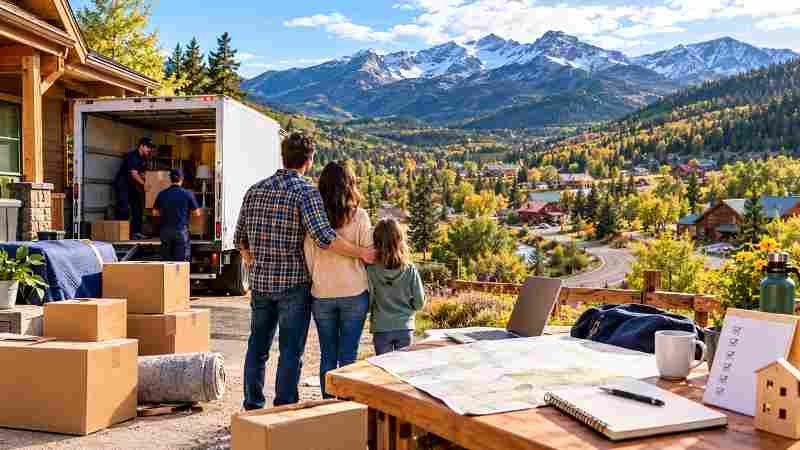
Moving to a small mountain town sounds simple. Fewer people, quieter streets, mountains in every direction. But the move itself can be harder than a city move, and plenty of people find that out on moving day.
Distances are longer. Weather changes fast. The nearest hardware store, storage unit, or pharmacy might be a half-hour drive away. It just means the planning needs to start earlier and cover a few things a city move doesn’t.
This guide walks through what to expect and how to prepare, so your move to a place like southwest Colorado goes smoothly.
Understand What Makes a Mountain Move Different
Before you pick a date or buy a single box, it helps to know how mountain towns work. A few local realities shape almost every decision you’ll make.
Weather and Road Conditions
Mountain weather doesn’t follow a schedule. A sunny morning can quickly turn into an afternoon snowstorm, and roads that were clear earlier in the week may become icy a few days later. In southwest Colorado, highways like US 160 carry most of the traffic between small towns, and a single slow stretch can change your whole day.
Pick a backup date. Check road conditions the night before and again the morning of. Ask your movers how they handle weather delays, and agree on that plan in advance rather than on the day.
Summer has its own quirks. Afternoon thunderstorms, construction, and tourist traffic can slow things down. Early starts help in every season.
Distance From Services
In a city, forgetting packing tape means a five-minute errand. In a small town, it might mean an hour round trip. The same goes for last-minute needs like extra boxes, a replacement part for a bed frame, or a lock for the new front door.
The fix is to over-prepare. Buy more supplies than you think you need. Make a short list of everything required for the first night, and keep it separate from the rest. Where you can, find the nearest hardware store and grocery store before moving day, so you know what’s available and when it closes.
Build a Timeline That Works Backward
The easiest way to reduce moving stress is to set your moving date first and plan each task backward from there. Pick your target date, then set milestones leading up to it.
Here’s a simple version that works for most households:
- Six to eight weeks out: Decide on your moving date, start getting quotes, and begin sorting belongings into keep, donate, and sell piles.
- Four weeks before moving: Reserve a moving company or rental truck, purchase packing materials, and begin boxing up items you rarely use.
- Two weeks out: Set up utilities and internet at the new address, and update your mailing address.
- One week out: Pack most of the house, confirm details with your movers, and prepare a bag of essentials.
- Moving day: Do a final walkthrough of the old home, photograph meter readings, and keep important documents with you.
Small towns often have limited availability. A handful of local movers, a few rental trucks, and a small pool of internet providers mean popular dates fill up quickly, especially at the end of the month and during summer. Booking early gives you better choices and lower stress.
One detail people forget: utilities in rural areas can take longer to set up than in cities. Propane delivery, well water, septic systems, and satellite or fixed-wireless internet may all be part of your new home. Call these providers early, because some need an in-person visit or a few weeks of lead time.
Pack for Distance and Rough Roads
Packing for a ten-minute city move and packing for a 45-minute mountain drive are not the same. Roads wind, climb, and drop. Boxes shift.
A few packing habits make a real difference:
- Use smaller boxes for heavy items like books and tools. A large box full of books is hard to lift and easy to drop.
- Fill space in every box with paper or towels so nothing slides around.
- Wrap dishes individually and pack them on their sides, not flat.
- Use mattress bags and furniture pads, since dust and moisture are common on rural roads and in uncovered trucks.
- Label every box with the room and a short note about what’s inside.
Think about temperature too. Low temperatures can cause some items to crack, while excessive heat may damage others. Candles, plants, liquids, electronics, and certain cosmetics are particularly sensitive to sudden temperature changes. If your move happens in winter or midsummer, pack these items last and keep them in a climate-controlled space, such as your car, if you can.
It should hold toiletries, medications, chargers, basic tools, bedding, a few kitchen items, and anything your family needs right away. Rural arrival times can run late, and you don’t want to dig through forty boxes in the dark.
Plan Early for Bulky and Awkward Items
Every household has a few items that don’t fit normal moving advice. In mountain communities, these tend to be even more common. Think hot tubs, gun safes, pianos, woodstoves, large tool chests, gym equipment, and outdoor gear like kayaks, bikes, and skis.
These items are heavy, awkward, or both. A hot tub or safe can weigh hundreds of pounds, and a piano can be damaged just as easily as it can hurt someone. Rural homes often have gravel driveways, steep slopes, narrow gates, or stairs without railings, which adds to the difficulty.
Ask these questions early:
- What is the item’s total weight, and what are its precise measurements?
- Will it fit through doorways, hallways, and gates at both homes?
- Is there a clear path from the truck to its final spot?
- Does it need special equipment, like ramps, dollies, or straps?
- Does it need to be drained, disconnected, or disassembled first?
If any answer is unclear, that’s a sign to get professional help. Some items can be moved by a few friends with the right tools. Others are better left to people who handle them regularly.
Don’t forget about outdoor items. Firewood, patio furniture, garden tools, and sheds’ worth of equipment add up quickly. Decide what’s worth moving and what’s easier to sell or replace.
Decide Between DIY and Hiring Help
Most people start by thinking they’ll move themselves. For a small apartment and a handful of friends, that can work well. For a full house, steep driveways, or a longer drive, the picture changes.
Moving yourself costs less up front, but it comes with hidden expenses. You pay for the truck, fuel, supplies, and often food for helpers. You also spend time loading, driving, and unloading, and you take on the risk of damage or injury. If something breaks or someone gets hurt, you’re responsible.
Hiring professionals costs more on paper, but it often saves time and reduces stress. It makes the most sense when you have a lot of belongings, heavy items, a tight timeline, or limited help.
If you go this route, a local crew usually has an edge. A moving company in Bayfield or the surrounding area already knows the roads, the weather patterns, and the quirks of local homes. High Mountain Moving, for example, handles residential, commercial, and long-distance moves across southwest Colorado, and is licensed and insured.
Whichever company you consider, a few steps will help you choose well:
- Get at least two or three written quotes. Compare what’s included, not only the final number.
- Ask about insurance. Make sure you understand what coverage is provided if any of your belongings are damaged during the move.
- Check reviews and ask for references. Look for patterns, not just star ratings.
- Confirm how pricing works. Hourly rates, flat rates, travel time, and fuel charges can all differ.
- Ask about experience with your specific situation. This matters for stairs, long driveways, or heavy items.
Clear communication matters most. A good moving company will answer questions without pressure and explain the process in plain terms. If a quote feels vague or too good to be true, ask more questions before you commit.
Take Care of the Small Stuff Before You Arrive
A move isn’t only about boxes. A lot of the stress comes from the administrative side, and small towns can add a few extra steps.
Start with your address. Update it with the post office, your bank, your employer, insurance companies, and any subscriptions. Some small-town post offices have limited hours, so it’s worth checking when yours is open. If you’re moving to a rural route or PO box, find out how packages are delivered, since some carriers don’t deliver to every address.
Next, look at the practical details of your new home:
- Where’s the main water shutoff, and where’s the breaker panel?
- How is the home heated, and when was the system last serviced?
- Who handles trash and recycling? Some areas rely on transfer stations rather than curbside pickup.
- What are the local rules for firewood, burning, or wildlife-safe food storage?
Wildlife is another part of mountain living that new residents don’t always expect. Depending on the area, you may share space with deer, elk, bears, or other animals. Learn the local guidelines for trash, bird feeders, and pet food before you settle in.
Finally, introduce yourself. Small communities tend to be friendly, and neighbors are often the best source of local advice. They can tell you which plumber to call, when the roads get plowed, and which grocery store has the best produce.
Give Yourself Room to Adjust
Even a well-planned move takes time to settle. You’ll probably discover that something doesn’t fit, a box didn’t make it, or the house has its own quirks. That’s normal.
Unpack the essentials first. Set up beds, the kitchen, and the bathroom before you worry about decorations. Spread the rest over a couple of weeks instead of trying to finish it all in a day.
Give yourself time to explore, too. Part of the reason you moved was the lifestyle, so take a walk, drive the back roads, and find your favorite local spots. A move is a lot of work, and it’s worth enjoying the place you’re moving to.
Final Takeaways
Moving to a small mountain town rewards people who plan. The basics are the same as any move, but weather, distance, and rural logistics make the details matter more.
Keep these points in mind:
- Start early, and build a timeline that works backward from moving day.
- Plan for weather delays, especially in winter, and keep a backup date.
- Pack for longer drives and rougher roads.
- Identify heavy or awkward items early, and decide who will handle them.
- Compare written quotes if you hire help, and ask about insurance and pricing.
- Set up utilities, internet, and address changes well before you arrive.
- Learn the local habits, from wildlife to trash service, as soon as you can.
With a little preparation, the move becomes much more manageable, and you can get to the part you were looking forward to: living in the mountains. See more