
Most London homes have a loft. Most of those lofts are being used to store things that probably should have been thrown away years ago. Boxes from previous moves. A bicycle that has not been ridden in a decade. Old furniture that seemed too good to get rid of but too inconvenient to actually use.
Meanwhile, the family below is short on bedrooms. Or working from home in a corner of the living room. Or paying for a house that does not quite have enough space for how they actually live.
A dormer loft conversion changes that. It takes what is essentially dead space at the top of the house and turns it into a proper, usable room. And in London, where extending outward means losing garden and moving means spending hundreds of thousands more than you already have, going up is often the smartest decision a homeowner can make.
What Is a Dormer Loft Conversion?
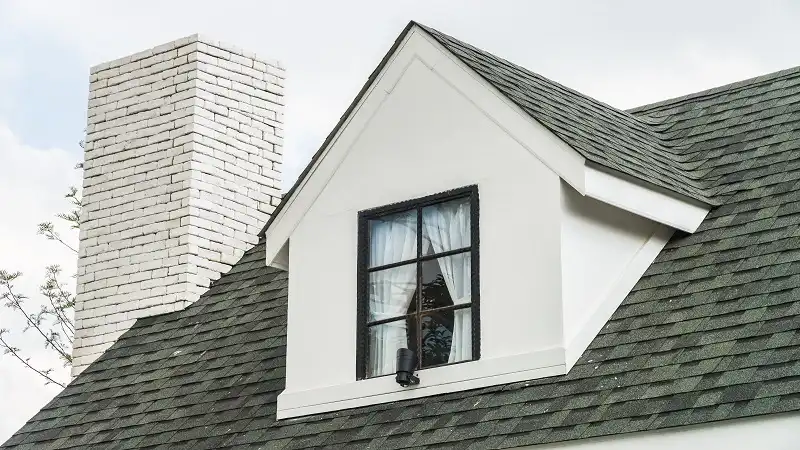
A dormer loft conversion adds a vertical extension to the roof slope of an existing house. The dormer itself is a structural box that projects outward from the roofline, with a flat or low-pitched roof and vertical walls containing windows. It creates usable headroom across a much larger portion of the loft floor area than the original sloping roof allows.
Without a dormer, loft conversions are constrained by the existing roof pitch. The headroom at the ridge may be adequate, but it falls away quickly toward the eaves. The usable floor area is a fraction of the total footprint. With a dormer, the usable area expands significantly because the vertical walls create full standing height across the rear or side of the space.
The result is a room that functions like any other room in the house. Not a novelty space with awkward angles where you have to duck to reach the wardrobe. An actual bedroom, bathroom, or home office that feels considered and properly finished.
Types of Dormer Loft Conversion
Not all dormers are the same. The appropriate type for your property depends on the roof structure, the planning requirements, and what you are trying to achieve with the space.
| Dormer Type | Description | Best Suited For | Planning Typically Needed |
| Rear dormer | Full-width box extending from the rear roof slope | Maximum space, primary conversion type | Often permitted development |
| Hip to gable | Extends the hip end of the roof to create a gable wall | Semi-detached and detached homes | Often permitted development |
| L-shaped dormer | Combines a rear dormer with a side return dormer | Victorian terraced houses | Often permitted development |
| Mansard dormer | Near vertical rear slope with flat roof section | Maximum volume, Conservation areas | Usually, planning permission is needed |
| Side dormer | Extends from the side roof slope | Where the rear is restricted | Often, planning permission is needed |
The rear dormer is the most common type across London’s terraced housing stock. It runs the full width of the rear roof slope, creating the largest possible usable floor area in the loft. For a typical Victorian or Edwardian London terrace, a rear dormer conversion transforms what was essentially an unusable void into a proper double bedroom with an en-suite bathroom.
The L-shaped dormer is particularly popular on Victorian terraced houses in inner London. It combines a rear dormer with a smaller side dormer over the outrigger, which is the single-storey or two-storey rear projection common to these properties. The L-shape creates a significantly larger floor plan and allows for more flexible room layouts than a simple rear dormer alone.
Planning Permission for a Dormer Loft Conversion in London
This is where many homeowners feel uncertain, and understandably so. The rules are not complicated once you understand them,m but they do vary based on your property type and location.
Most dormer loft conversions on houses in London can proceed under permitted development rights without a full planning application. The key conditions that apply under permitted development are as follows. The additional volume created by the dormer cannot exceed 40 cubic metres for a terraced house or 50 cubic metres for a detached or semi-detached property. The dormer cannot extend beyond the plane of the existing roof slope on the front elevation facing the highway. Materials should be similar in appearance to the existing house. No balconies are permitted under permitted development. Side-facing windows must be obscure-glazed.
Where permitted development does not apply is primarily in conservation areas and for properties where an Article 4 Direction has removed permitted development rights. London has a high concentration of conservation areas, and many inner boroughs have applied Article 4 Directions across significant portions of their residential streets. In these situations, a full planning application is required, and the dormer design must satisfy the local authority’s requirements.
Mansard roof conversions almost always require planning permission regardless of location because their near-vertical rear slope falls outside the standard permitted development parameters. However, they are commonly approved in conservation areas precisely because their profile is considered more sympathetic to historic streetscapes than a standard box dormer.
Extension Architecture assesses the planning position for every project at the outset. Whether your conversion can proceed without a planning application or requires one, they handle the process and ensure the design is appropriate for your specific location.
How Much Space Does a Dormer Loft Conversion Actually Create?
This depends on the house’s footprint and the type of conversion. But to give a realistic sense of what is achievable on a typical London terraced property, a rear dormer conversion on a mid terraced Victorian house with an original footprint of around 6 metres wide typically creates a usable floor area of between 25 and 40 square metres, depending on the depth of the roof and whether an L-shaped dormer is included.
That is enough for a generous double bedroom with a full en suite bathroom and still space for a walk-in wardrobe or a small dressing area. Or a home office with a separate bathroom. Or two smaller bedrooms sharing a bathroom, which works well for growing families who need the extra sleeping capacity without the cost of moving.
The conversion also frees up rooms below. A teenager who moves into the loft bedroom gives up a ground-floor room that can become a proper study or reception room. The whole house functions better when the space is distributed properly across the floors.
Structural Considerations
A dormer loft conversion involves significant structural work. The existing roof structure needs to be assessed and, if necessary, modified. New floor joists are installed to create a proper floor capable of taking residential loads rather than the light storage loads the original ceiling joists were designed for. The dormer itself needs its own structural frame, roof, and weatherproofing detail. And the staircase needs to be carefully planned to connect the new floor to the one below without consuming too much space on the landing.
Steelwork is commonly required to support the new floor structure, particularly on older properties where the existing timber is not adequate for residential loading. Party wall agreements with neighbours are often needed on terraced and semi-detached properties because the structural work affects or comes close to the shared wall.
Extension Architecture works with experienced structural engineers throughout the design and build process. The structural scheme is developed alongside the architectural design from the start, ensuring consistency and buildability rather than conflicts on site.
Building Regulations for a Dormer Loft Conversion
Building regulations approval is required for all loft conversions, regardless of whether planning permission is needed. The building regulations cover structural safety, fire escape, insulation, ventilation, and the staircase specification.
Fire safety requirements for loft conversions are worth understanding clearly. Adding a habitable room at the top of a house creates a new storey and typically requires installing mains-wired smoke alarms on each floor, and may require fire doors in certain rooms to provide a protected escape route. These requirements are not optional, and building control will check compliance at each stage of the build.
The staircase is another area where building regulations specify requirements for headroom, pitch, and tread dimensions. Fitting a compliant staircase into an existing house without significantly disrupting the floor plan below requires careful design. It is one of the areas where experience on similar London properties is genuinely valuable because the constraints are familiar and the solutions are known.
What Does a Dormer Loft Conversion Cost in London?
Costs vary based on size, specification, and the type of dormer. As a general guide, a dormer loft conversion in London typically ranges from £40,000 to £80,000 for the construction work on a standard terraced house. An L-shaped dormer, or a more complex project with higher-specification finishes, sits toward the upper end of that range or beyond.
Professional fees, building regulations, and any party wall costs add to the construction figure. But even at the upper end, a well-executed dormer loft conversion typically adds more value to a London property than it costs, particularly in areas where bedroom count significantly affects sale price.
Starting Your Dormer Loft Conversion
The first step is understanding what your specific property can accommodate and what your planning position looks like. From there, the design process can begin properly with a clear understanding of what is achievable.
Extension Architecture has delivered dormer loft conversions across London on all types of properties. They know the structural realities, the planning requirements, and the design decisions that produce a finished conversion that works properly as a home rather than just passing building control.
Get in touch with Extension Architecture to start the conversation about your dormer loft conversion and find out what is possible for your London home.