
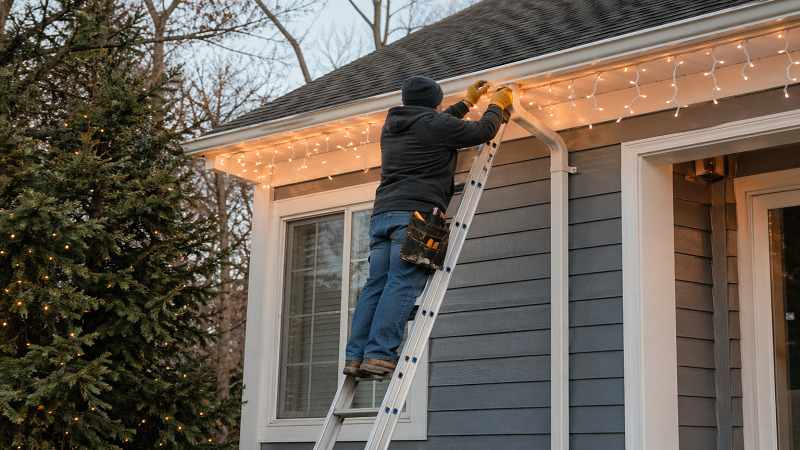
In Blacksburg, April is a sigh of relief. The long, gray winter has finally released its grip. The cherry blossoms near the Virginia Tech duck pond are peaking, and the smell of fresh mulch fills the air. For most people, this month is reserved for spring cleaning—scrubbing windows, airing out rugs, and packing away heavy coats.
But smart homeowners know something that frantic December decorators do not: April is the single best month to prepare for the holidays.
While your neighbors are focused on pollen and yard work, you have a golden opportunity to inspect, repair, and plan for the single most stressful home improvement task of winter: hanging Christmas lights. By acting now, you avoid frozen fingers, icy ladders, and emergency electrical work in November. This article will walk you through exactly what to do this April to ensure your roof and tree Christmas light installation in Blacksburg goes smoothly when the time comes.
Why Spring Beats Fall for Holiday Preparation
Most people wait until the day after Thanksgiving to think about their roofline. That is a mistake. In the New River Valley, November is unpredictable. One day it might be 65 degrees; the next, you are scraping frost off your windshield at 7:00 AM.
Waiting until fall to inspect your home’s exterior means you are racing against the clock, the cold, and the early sunset. April offers mild temperatures, longer daylight hours, and—most importantly—time. You have six months to fix problems instead of six days. By shifting your mindset from “spring cleaning only” to “spring planning,” you turn a chaotic December into a calm, click-and-deploy operation.
Inspecting Your Roofline: The Foundation of a Great Display
Before you buy a single clip or strand of C9 bulbs, you need to look it up. Your roofline is the backbone of any professional holiday display. If it is damaged, nothing else matters.
Look for Winter Damage
Pay close attention to the fascia boards (the long, straight boards behind your gutters) and the soffits (the underside of your roof overhang). Harsh Blacksburg winters—complete with ice dams and heavy snow—can loosen nails, rot wood, or pull gutters away from the house.
If your fascia board is sagging or showing signs of dry rot, it will not hold the weight of light clips, extension cords, and bulb strands. A loose clip in December means lights drooping across your garage door or, worse, falling onto a frozen sidewalk.
Gutters Matter More Than You Think
Most homeowners assume gutters are only for water management. In holiday decorating, gutters are the primary mounting point for roof lights. If your gutters are pulling away from the house, filled with leaves, or rusted through, you have a problem.
April action item: Clean your gutters now, not in October. Look for separation where the gutter meets the fascia. Tap the metal with a screwdriver—if it sounds hollow or moves easily, you need to re-secure it. By fixing these structural issues in the spring, you ensure that when you schedule your roof and tree Christmas light installation in Blacksburg, the mounting surfaces are rock solid.
Testing Your Outdoor Electrical Grid
You cannot have a spectacular holiday display without power. Yet every November, thousands of homeowners drag 12-foot ladders out of storage only to discover that their outdoor outlets are dead, tripped, or corroded.
The Simple Outlet Test
April is the perfect time to test every exterior receptacle on your property. You will need a small appliance (like a hair dryer or a phone charger with a light indicator) and a GFCI tester (available for $10 at any hardware store).
Go to every outlet: front porch, back deck, eaves, driveway, and even the side yard. Plug in your tester. Press the “test” button. The outlet should click and shut off. Press “reset.” It should come back on.
If an outlet fails to reset or if it feels warm to the touch, you have a problem that needs an electrician. If the plastic cover is cracked or missing, replace it now. Trying to hire an electrician in Blacksburg the week before Thanksgiving is nearly impossible—they are booked solid with furnace repairs and space heater installations. Doing this simple test in April gives you a six-month window to schedule a non-emergency service call.
Counting Your Circuits
While you are outside, count how many outlets you have and try to identify which circuit breakers control them. A single 15-amp circuit can typically handle about 1,440 watts of LED lights (which is a lot). But if you plan to use older incandescent bulbs or inflatables, you need to distribute the load. Knowing your layout in April means no blown breakers on Christmas Eve.
Tree Trimming: Safety and Access
Blacksburg is famous for its beautiful, mature hardwoods. However, those same trees become a significant liability during holiday decorating. Branches that overhang your roof do three things wrong: they scrape shingles, they drop sap and debris onto your lights, and they physically block access to the eaves.
The 6-Foot Rule
In April, hire a local arborist or rent a pole saw to trim any branches within six feet of your roofline. This is not just about aesthetics; it is about safety. A ladder placed on uneven, leaf-covered ground is dangerous enough. Adding a low-hanging branch that forces you to lean sideways is an accident waiting to happen.
Furthermore, if you plan to wrap trees in lights (a classic Blacksburg look), you need clear access to the trunk. April trimming removes dead wood, shapes the canopy, and ensures that when November arrives, you have a clean, unobstructed path around your trees.
Protecting Your Lights from Sap
Pine and oak trees drip sap. If you hang lights on a branch in November and leave them there until January, that sap will bake onto the plastic and glass during warm winter afternoons. By trimming back the heaviest sap-producing branches in the spring, you reduce the amount of sticky residue that will ruin your expensive light strands.
Auditing Your Existing Lights and Gear
You cannot plan a display if you do not know what you own. April is the time to drag those plastic bins out of the attic or garage while the temperature is still cool enough to be comfortable.
The Plug Test
Untangle every strand. Plug each one into a working indoor outlet. Walk the entire length looking for:
- Burned-out bulbs (replace them now)
- Frayed or chewed wires (discard the strand immediately)
- Cracked sockets (tape is not a fix; throw it away)
Keep a notepad. Write down exactly how many feet of working lights you have, how many extension cords, and how many spare clips. If you are short, order replacements in April or May when prices are low. Waiting until October means paying full retail or finding empty shelves.
Upgrading to LED
If your audit reveals mostly incandescent strands, consider upgrading to LED this spring. LED lights use 80-90% less energy, which means you can connect more strands end-to-end without tripping a breaker. They also run cool to the touch, reducing fire risk if they touch dry leaves or pine needles. Many manufacturers release “spring pre-order” discounts for holiday gear—take advantage of that.
Scheduling Professional Installation
Here is the secret that truly smart homeowners know: Professional roof and tree Christmas light installation in Blacksburg books up months in advance.
The best installers in the New River Valley start filling their calendars in September. By October, weekend slots are gone. By November, you are paying rush fees or getting stuck with a DIY job in freezing rain.
If you plan to hire a professional—even for just the difficult parts, like the second-story roofline or a tall maple tree—you should make that call in April. Use your inspection notes to describe exactly what you need: “I have a 40-foot roofline with a gutter that was repaired in May, and two oak trees trimmed in April.” That level of detail gets you on the good list.
More importantly, scheduling early locks in pricing. Inflation affects everything from fuel to labor. Booking in April protects you from November price hikes.
Creating Your Holiday Blueprint
Finally, take 30 minutes this April to draw a simple map of your property. Mark every outlet, every roofline peak, every tree you want to wrap, and every bush you want to net with lights. Note the distances between outlets and display areas so you know exactly how long your extension cords need to be.
Store this map inside your light bins. When December arrives, you will not waste an afternoon scratching your head. You will simply pull out the map and execute the plan you made six months ago.
Conclusion: A Little Spring Work Saves a Lot of Winter Headaches
Blacksburg is a wonderful place to celebrate the holidays, but only if you are not standing on a frozen ladder at 5:00 PM on a Sunday trying to staple-gun lights to a rotting fascia board.
By using April as your planning season—inspecting rooflines, testing outlets, trimming trees, auditing lights, and scheduling professionals—you transform holiday decorating from a frantic race into a relaxed ritual. Your future self, sipping hot cocoa in a warm living room while your perfectly installed lights twinkle outside, will thank you. Start today. Your stress-free December depends on what you do right now. See more.